Going Steady: A Creative Font for Bold Branding
When you’re building a brand, your typography does more than just spell out words—it sets a mood. Going Steady is the kind of typeface that immediately establishes a specific atmosphere. It isn’t a standard serif font or a utilitarian sans serif; it is a premium font designed for impact. Featuring a mixed and whimsical lettering style, this display font combines the warmth of a handwritten font with the precision of modern digital design. The result is a typeface that feels personal, artistic, and undeniably cool.
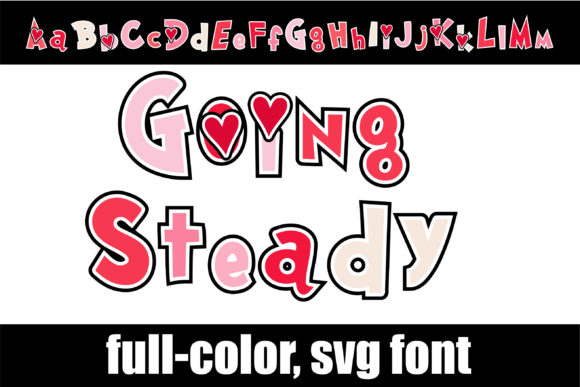
The defining characteristic of Going Steady is its red/pink color palette. As an Opentype-SVG color font, it renders in full color directly from the font file. This means you don’t have to layer effects or manually add gradients in Photoshop to get that rich, inked look. The letters have depth, texture, and shading that simulate real brush strokes or marker pens. For designers tired of flat, static text, this offers a refreshing level of realism right out of the box.
Visual Personality and Style
The visual language of Going Steady is expressive. It captures a vibe that is equal parts rock-and-roll and sweet shop. The letterforms are energetic, featuring creative swashes and ligatures that make each word look unique. Because it is a color font, the interplay of light and shadow within the strokes adds a three-dimensional quality. It doesn’t just sit on the page; it jumps off it.
However, this distinct personality requires a strategic approach. You wouldn’t use a script font like this for body copy in a lengthy report. Readability drops significantly with ornate, textured display types at small sizes. Instead, think of Going Steady as your headline specialist. It is designed to be the focal point. Its whimsical nature makes it perfect for projects that need to convey fun, creativity, or a rebellious spirit. It feels handcrafted, which adds a layer of authenticity to brand identity work.
Where This Font Shines
Finding the right application for a creative font like this is key to success. Because of its bold aesthetic, Going Steady excels in environments where grabbing attention is the primary goal. It is a versatile design asset for various mediums, provided you understand its strengths.
Consider these practical applications for your next project:
- Packaging Design: If you are designing labels for artisanal goods, cosmetics, or snacks, this font creates an immediate shelf appeal. The red and pink tones suggest flavor, passion, and excitement.
- Logo Design: For brands targeting a youthful or trendy demographic, Going Steady works well as a primary wordmark. It ensures the brand looks modern and approachable.
- Social Media Graphics: In the fast-scrolling world of Instagram or TikTok, you have seconds to capture interest. Use this font for sale announcements, quotes, or headers to stop the scroll.
- Editorial Design: Magazine covers and feature article headers benefit from the high-impact nature of this typeface. It adds a layer of stylistic flair that standard serif fonts cannot match.
It is also an excellent choice for crafters and hobbyists. If you are creating custom merchandise, t-shirts, or mugs, the SVG format ensures the text looks printed professionally, mimicking the look of DTG (Direct to Garment) printing without the hassle of file conversion.
Practical Guidance for Designers
Integrating a specialized font like Going Steady into your workflow requires attention to technical details. This is a commercial font that relies on specific technology to function correctly. It is PUA encoded, which stands for Private Use Areas. This is a technical way of saying that every glyph, swash, and alternate character is accessible, even if your design software doesn't have a sophisticated glyph panel.
Compatibility is the most critical factor here. Going Steady is compatible with professional design software like Adobe Photoshop, Illustrator, Silhouette, and Inkscape. These programs support the advanced OpenType features required to render the color data.
A Note on Compatibility: It is vital to understand the limitations of this technology. Because it is an Opentype-SVG file, the standard OTF and TTF files are not compatible with Cricut machines. If you are a crafter using Cricut Design Space, you will encounter issues rendering the color data. Always check the Ultimate Font Guide provided by the creator to understand how to extract and use these assets correctly in your specific machine or software.
Pairing and Hierarchy
When using Going Steady, establishing a visual hierarchy is easy because the font demands attention. However, it needs a partner to balance it out. Since Going Steady is a display font with high texture and color, pairing it with a clean, neutral sans serif font is a smart move.
Imagine a poster design. You might use Going Steady for the main headline—"Summer Sale" or "New Arrival"—in large format. Below that, use a geometric sans serif for the details, like dates, times, and location. This contrast allows the creative font to do the heavy lifting visually while the secondary font ensures the information is legible.
Avoid pairing it with another script font or a highly decorative serif. Too many competing styles create visual noise, confusing the viewer rather than engaging them. The goal of modern typography is clarity and impact; Going Steady provides the impact, so your supporting typeface must provide the clarity.
Evaluating Project Fit
Before you commit to using Going Steady, evaluate the tone of your project. Does the brand voice align with "whimsical," "edgy," or "artistic"? If you are working on a corporate law firm’s website or a medical brochure, this font is likely too casual and loud. However, if you are working on a music festival poster, a boutique clothing brand, or a lifestyle blog, it fits perfectly.
Think about the longevity of the design. Trends in typography shift, but a well-crafted color font can remain effective if used in the right context. Going Steady offers a specific aesthetic that can elevate a campaign from generic to memorable. By focusing on its strengths—visual texture, bold color, and expressive lettering—you can create designs that resonate deeply with your audience.