Peacock: A Bold Color Font for Modern Creators
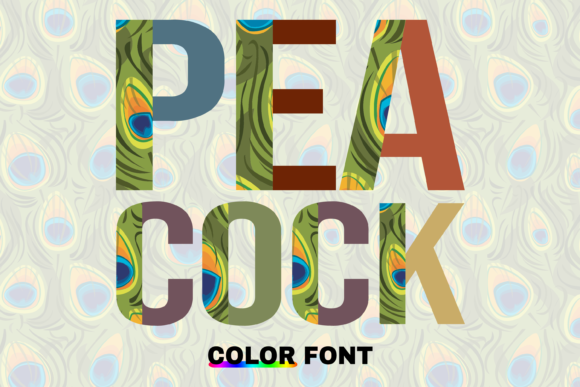
When you first encounter the Peacock font, you immediately notice its confidence. This isn’t a typeface that blends into the background; it steps forward to claim attention. Designed as a premium font with a distinct personality, Peacock offers a dual-style approach that sets it apart from standard typography. It functions as a color font (specifically Opentype-SVG), meaning the characters contain rich, built-in color gradients and textures. This technology allows you to skip the manual coloring process in your design software—what you type is what you get. The result is a vibrant, textured aesthetic that feels hand-finished and modern.
The visual structure of Peacock leans heavily into contemporary display font territory. It features bold strokes and a flair that bridges the gap between script font energy and structured serif font legibility. The "duo" nature of the family is its strongest asset. You get a solid black version for standard printing or screen use, and the full-color version for when you need that extra layer of depth. This duality makes it incredibly versatile. Whether you are designing a logo for a boutique brand or creating social media graphics for a launch, the font adapts to the mood you need to set. It doesn’t just spell out words; it creates an atmosphere.
Where Peacock Fits Into Your Creative Workflow
Understanding where a creative font like Peacock belongs is key to using it effectively. Because of its detailed texture and color properties, it shines brightest in projects where typography acts as a focal point rather than a utility. It is not designed for writing long-form blog posts or dense body copy. Instead, think of it as the headline act.
For brand identity work, Peacock offers a unique opportunity for businesses that want to appear bold and distinctive. Imagine a cosmetics brand, a modern bakery, or a fashion boutique using this typeface for their packaging. The built-in color and texture mimic the look of foil stamping or screen printing without the production cost. It brings a tactile quality to packaging design that standard vector fonts often lack. When you place this on a label, it immediately suggests a product that is premium and carefully curated.
In the realm of editorial design and web design, usage requires a bit more strategy. For magazines, zines, or digital lookbooks, Peacock is perfect for drop caps or pull quotes. It breaks up the monotony of standard text columns and draws the reader’s eye to key phrases. On the web, while you wouldn't use it for navigation menus, it serves as a stunning hero image font or for specific call-to-action sections where you want to stop the user from scrolling.
Crafters and DIY enthusiasts will find Peacock particularly exciting, provided they are using compatible software. If you work in Silhouette Studio, Adobe Photoshop, or Illustrator, the color font technology translates beautifully to stickers, decals, and heat transfers. It saves hours of editing time because the shading and color variation are already embedded in the file. However, it is crucial to remember the technical limitations: this font is not compatible with Cricut software due to its SVG nature. For Cricut users, this is a "look but don't touch" situation unless you plan to use it for print-then-cut designs via a compatible program.
Design Strategy: Pairing and Readability
Using a display font effectively often comes down to contrast. Peacock is a high-personality typeface, meaning it demands a quieter partner. If you pair it with another decorative font, the result will likely be visual noise. Instead, lean on the classics. A clean, geometric sans serif font is the perfect companion. Think of fonts like Montserrat, Lato, or even a simple Arial for digital screens. The simplicity of the sans serif allows Peacock’s intricate details and colors to pop without competition.
Readability is a major consideration with any decorative font. Because Peacock relies on color and texture, it performs best at larger sizes. If you shrink it down too small, the fine details of the SVG rendering might muddy together, making the letters hard to decipher. Always test your sizing. A good rule of thumb is: if you can't read the word instantly, the font is too small. This is why it is best suited for headlines, sub-headers, and short bursts of text rather than instructions or addresses.
From a brand perception standpoint, choosing Peacock signals that a brand is trendy, creative, and unafraid of color. It works exceptionally well for female-focused brands, creative agencies, and lifestyle products. However, it might feel out of place for a corporate law firm or a heavy industrial manufacturer. Context is everything. Before committing to it for a logo design, mock it up on different backgrounds—business cards, websites, and merchandise—to ensure the color rendering holds up across different mediums.
Technical Considerations for Professionals
As a designer or business owner, purchasing a commercial font involves more than just aesthetics; it involves logistics. Peacock comes with specific licensing and compatibility requirements that you must respect to avoid production headaches. As noted, the primary delivery format is Opentype-SVG. This is a modern typography standard, but it requires relatively recent software versions to function correctly. If you are running an older version of Photoshop (pre-CC 2017) or Illustrator (pre-CC 2018), the font may appear as a black block or fail to load entirely.
Before finalizing a project, review the font pairing and style options included. Having a solid black version included with the color version is a massive advantage. It allows you to create a consistent visual hierarchy. You might use the black version for standard text and the color version for the initial drop cap or a specific keyword you want to emphasize. This creates a cohesive look without overloading the viewer with too much texture.
Ultimately, Peacock is a tool for expression. It is a design asset that solves the problem of flat, lifeless typography. By integrating it thoughtfully into your marketing materials, social media strategy, or physical products, you add a layer of sophistication and fun that standard fonts simply cannot replicate. It requires a bit of technical care regarding software compatibility, but the payoff in visual impact is well worth the effort.